Irrigation Check: How to Spot Leaks, Clogged Emitters, and Uneven Watering
Irrigation problems are usually cheaper to diagnose early than to correct after a bed has thinned out, a hedge has stressed, or a low spot has quietly turned into a puddle with opinions of its own.
Homeowners usually arrive at the same set of questions: why is one part of the garden staying dry while another stays soggy, how do you tell the difference between a blocked emitter and a watering schedule problem, what can you safely inspect yourself, and when is it more sensible to stop guessing and call for diagnostics?
The useful starting point is to treat irrigation as a distribution problem rather than a mystery. Guidance from EPA WaterSense and general background on drip irrigation both point back to the same principle: water efficiency depends on getting the right amount to the right area at the right time.
This guide walks through a practical inspection order for drip and mixed garden systems: early warning signs, visual checks, emitter and line tests, coverage and timing adjustments, seasonal changes, preventive maintenance, and the point where professional help becomes the best fit. If you are new to the site, the homepage explains the wider garden maintenance focus, and Publications collects the broader care guides.
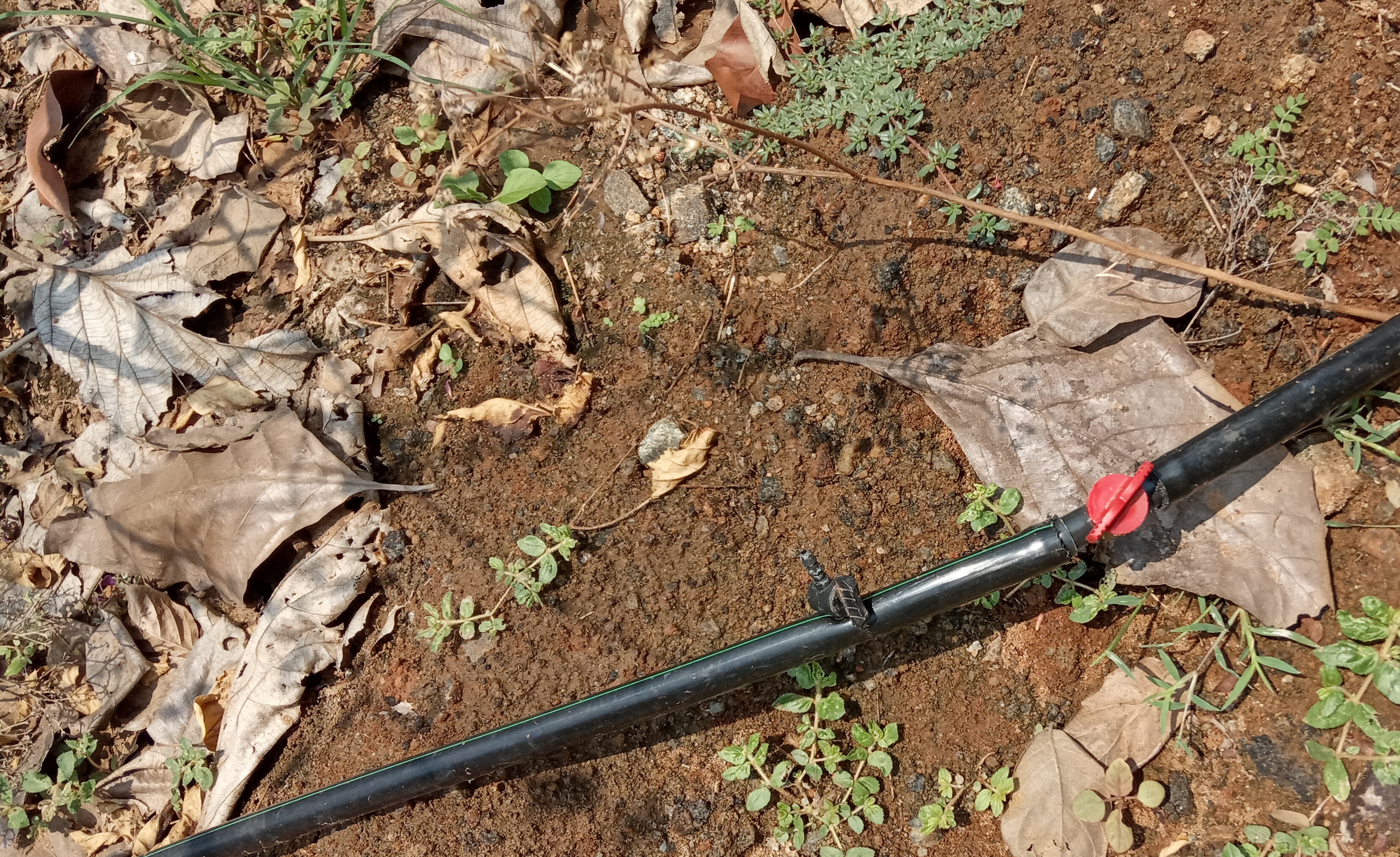
Quick Symptom Map
Before you start taking emitters apart, match the visible symptom to the most likely cause. This does not replace testing, but it does stop the usual mistake of changing the timer first and discovering later that the real problem was a kinked line or a leaking fitting.
| What you see | Likely cause | First check | Reasonable next move |
|---|---|---|---|
| A dry patch beside healthy growth | Blocked emitter, kinked line, short run time, or poor overlap | Run the zone and compare output at each emitter or sprinkler head | Clean or replace the emitter, straighten the line, then retest before changing the schedule |
| Puddles or constantly dark soil | Leak, cracked fitting, overwatering, or poor drainage | Look for bubbling, spray, or water pooling near connectors | Repair the leak first, then decide whether timing also needs to come down |
| Fungal growth, mildew, or yellowing at the base | Too much moisture, poor airflow, or watering too often | Check soil depth moisture instead of surface appearance alone | Reduce frequency, improve airflow, and monitor whether the zone is staying wet for too long |
| One zone looks weak from start to finish | Pressure problem, dirty filter, valve issue, or multiple clogs | Check filter condition and compare start-of-line versus end-of-line output | Clean filters, flush lines if practical, and escalate if pressure stays uneven |
Terms Worth Knowing Before You Start
It helps to name the parts correctly. You do not need to become technical about it, but a few simple terms make troubleshooting cleaner.
- Emitter: the small outlet that releases water slowly near the plant root zone.
- Lateral line: the smaller irrigation tube that carries water along a bed or planting strip.
- Zone: the part of the system that runs together on the same valve and timing cycle.
- Run time: how long the zone waters during one cycle.
- Coverage: whether water is reaching the full root area evenly, not merely whether the system is on.
The decision criteria are straightforward: find out whether the issue is local or system-wide, mechanical or scheduling-related, and temporary or persistent. That sequence tends to prevent expensive overcorrection.
Signs of Irrigation Problems
The three clearest warning signs are dry patches, puddles, and persistent fungal moisture. Dry areas suggest water is not reaching a section of roots consistently. Puddles suggest too much water is being delivered, or that water is escaping where it should not. Fungal growth, algae-like surface film, or a sour smell usually suggests a root zone that is staying wet for longer than the plant wants.
Do not judge only by leaf colour in the first pass. Underwatering and overwatering can both produce stress, and stressed plants are not always informative in a polite way. Look at the soil pattern, the hardware, and the neighbouring plants first. If one shrub is struggling while the next two are fine, the odds favour a delivery issue in that specific area.
In mixed gardens, compare beds by exposure as well. A full-sun slope and a shaded corner should not behave the same way. Uneven watering is sometimes a leak or clog, but sometimes it is a system running one schedule across areas with different sun, wind, soil, and planting density.
How to Do a Quick Visual Inspection
Start with a short run of the affected zone in daylight. A visual inspection is often enough to narrow the problem quickly.
- Walk the full line while the water is on. Look for obvious spray, bubbling, splitting, or small jets where a connection has loosened.
- Check around fittings, elbows, and tees. These are common failure points because they combine pressure with movement and temperature change.
- Look for abrasion or crushing. Lines can be damaged by tools, edging work, foot traffic, sun exposure, or being pinned too tightly.
- Watch water distribution, not just hardware. A line can appear intact while one plant receives almost nothing.
- Inspect the end of the run. Weak output there can suggest partial blockage, pressure drop, or a filter issue upstream.
If the system includes sprinklers as well as drip, pay attention to overlap and arc direction. A sprinkler head that has shifted slightly can create a dry crescent that looks like a soil problem when it is really a coverage problem.
This is also the point to check whether debris, mulch, or plant growth is covering emitters. An emitter buried under dense mulch may still be dripping, but not where you think it is.
Emitter and Line Checks
Once the visual pass narrows the area, move to the small mechanical checks. Keep this simple and do not force brittle parts.
- Turn off the zone before removing anything. This is the safe default and avoids turning a small inspection into a face-level spray test.
- Remove one suspect emitter at a time. Compare it with a working emitter if you can. Mineral build-up, grit, and tiny organic debris are common causes of weak flow.
- Rinse or flush gently. If the emitter still runs weak after cleaning, replacement is often the better use of time.
- Inspect the line for kinks, flattening, and hidden cuts. A partially pinched line can starve the section beyond it.
- Replace damaged couplers or tubing segments cleanly. Temporary improvisation tends to become permanent, and permanent improvisation usually leaks.
If multiple emitters in one zone show the same weak flow, step back and inspect the filter and the upstream hardware. Multiple identical failures are less likely to be coincidence than a sign of debris or pressure trouble reaching the whole line.
A reasonable homeowner fix usually ends at cleaning, swapping a small emitter, replacing a visibly damaged connector, or correcting a kink. Once the issue shifts into buried leaks, pressure diagnostics, valve faults, or repeated clogging across zones, professional testing becomes more defensible.
Testing Coverage and Timing
Once the hardware looks sound, test whether the schedule is matching the garden. Coverage and timing are related, but they are not the same thing. A short schedule on an even system gives you overall dryness. An uneven system on a longer schedule gives you dry spots and wet spots at the same time.
For sprinkler areas, a simple container or rain gauge test can show whether one part of the lawn or bed is receiving materially less water than the rest. For drip areas, compare how long it takes for the soil to moisten properly around several plants in the same zone. The goal is not perfect laboratory precision. The goal is to identify meaningful differences.
Scheduling guidance from the University of Minnesota Extension is useful here because it keeps the focus on plant need, weather, and soil moisture rather than the false comfort of a fixed timer that never changes.
Reasonable default: adjust one variable at a time. Fix the leak first. Clean the emitter first. Then change run time. If you change hardware and timing together, you make diagnosis slower, not faster.
Two questions help:
- Does every plant in the zone receive similar moisture by the end of the cycle?
- Is the soil still appropriately moist at the next scheduled run, or is the system watering by habit?
Watering Adjustments by Season
Seasonal adjustment is less about exact dates and more about actual conditions. In warm coastal gardens, hot months usually need longer or more frequent cycles, while cooler periods and rainy weeks usually need fewer. The mistake is keeping summer settings in place after the weather has changed.
| Seasonal pattern | What to watch for | Typical adjustment |
|---|---|---|
| Hot, dry months | Fast drying, container stress, wilt by afternoon | Increase carefully and inspect exposed zones more often |
| Mild transitional months | Mixed drying rates, cooler nights, uneven demand | Reduce frequency before reducing every run time drastically |
| Cooler or rainy periods | Persistent moisture, slower drying, fungal risk | Skip or shorten cycles based on actual soil moisture and rainfall |
The Royal Horticultural Society watering guide is a useful reminder that plant type, soil depth, and exposure matter more than any universal timer setting. A shrub border, a vegetable bed, and containers near reflective paving do not share the same reasonable default.
Preventive Maintenance Tips
Preventive maintenance is unglamorous, which is one reason it works. A short routine performed seasonally is usually enough to catch most irrigation trouble before it becomes visible plant damage.
- Run a seasonal inspection. Start of hot weather and start of cooler weather are the two obvious checkpoints.
- Clean filters and flush accessible lines. If the system uses filters, they deserve attention before the plants start filing complaints.
- Trim around emitters and heads. Buried or overgrown hardware is harder to inspect and easier to ignore.
- Monitor after other garden work. Planting, edging, pruning, and hardscape work often disturb irrigation lines.
- Keep simple notes. If one zone repeatedly clogs or one bed repeatedly dries unevenly, that pattern matters.
For many properties, preventive maintenance is not about sophistication. It is about repeating the same small checks often enough that the system stays predictable.
When Professional Diagnostics Are Worth It
Call for professional help when the issue is persistent, system-wide, or unclear after basic checks. That usually includes these scenarios:
- Leaks that seem buried or keep returning after a visible repair.
- Pressure issues affecting several zones or the far end of runs consistently.
- Valve, controller, or wiring concerns that go beyond straightforward scheduling checks.
- Mixed irrigation layouts where drip, sprinklers, slopes, and shade all interact poorly.
- Owners who do not have the time to test one variable at a time and need a clean diagnosis quickly.
The practical threshold is simple: if you have corrected the obvious local causes and the pattern still does not make sense, continued trial and error usually costs more in plant stress and wasted water than a proper site visit. If that is your situation, use the contact page to request help with irrigation inspection or broader garden maintenance.
A Reasonable Next Step
Pick the scenario that matches your garden today. If you have one dry patch, inspect the nearby emitter and line first. If you have puddles, look for a leak before touching the timer. If the whole zone feels inconsistent, test coverage and filter condition before you assume the plants are simply thirsty. That order is not glamorous, but it is usually the safest reasonable default.
If you want more practical garden reading after this, browse the rest of our Publications. If the irrigation problem is already costing you time or plant health, the faster option is to get in touch for a garden review.