Pool Equipment Care: Filter, Pump, and Skimmer-What to Check
Most pool breakdowns start as small warning signs, not sudden disasters. A filter that is loading up too fast, a pump that sounds a little rough, or a skimmer basket that keeps filling with debris are all signals from the system. The trick is to read them early, before a minor maintenance job becomes an expensive repair.
If you have ever asked yourself why the water flow looks weaker after a windy week, why the pump makes a new noise after cleaning day, or why the skimmer seems to catch everything except what you want, this guide is for you. The goal is simple: keep the circulation loop clean, predictable, and boring. Boring is good. Boring keeps water moving and invoices smaller.
That matters because circulation is the backbone of pool hygiene. The CDC Healthy Swimming guidance is a useful baseline for why clean water movement matters, while basic overviews of a swimming pool filter and swimming pool pump show how much the system depends on flow, not guesswork. In practice, most pool owners do not need a masterclass. They need a repeatable inspection loop.
In the sections below, you will learn what to check on the filter, pump, skimmer, baskets, hoses, and connections; how to spot the difference between normal wear and a real fault; and when to stop tinkering and call a technician. If you want a local service contact later, you can always start from the homepage, use the contact page, or check where we work.
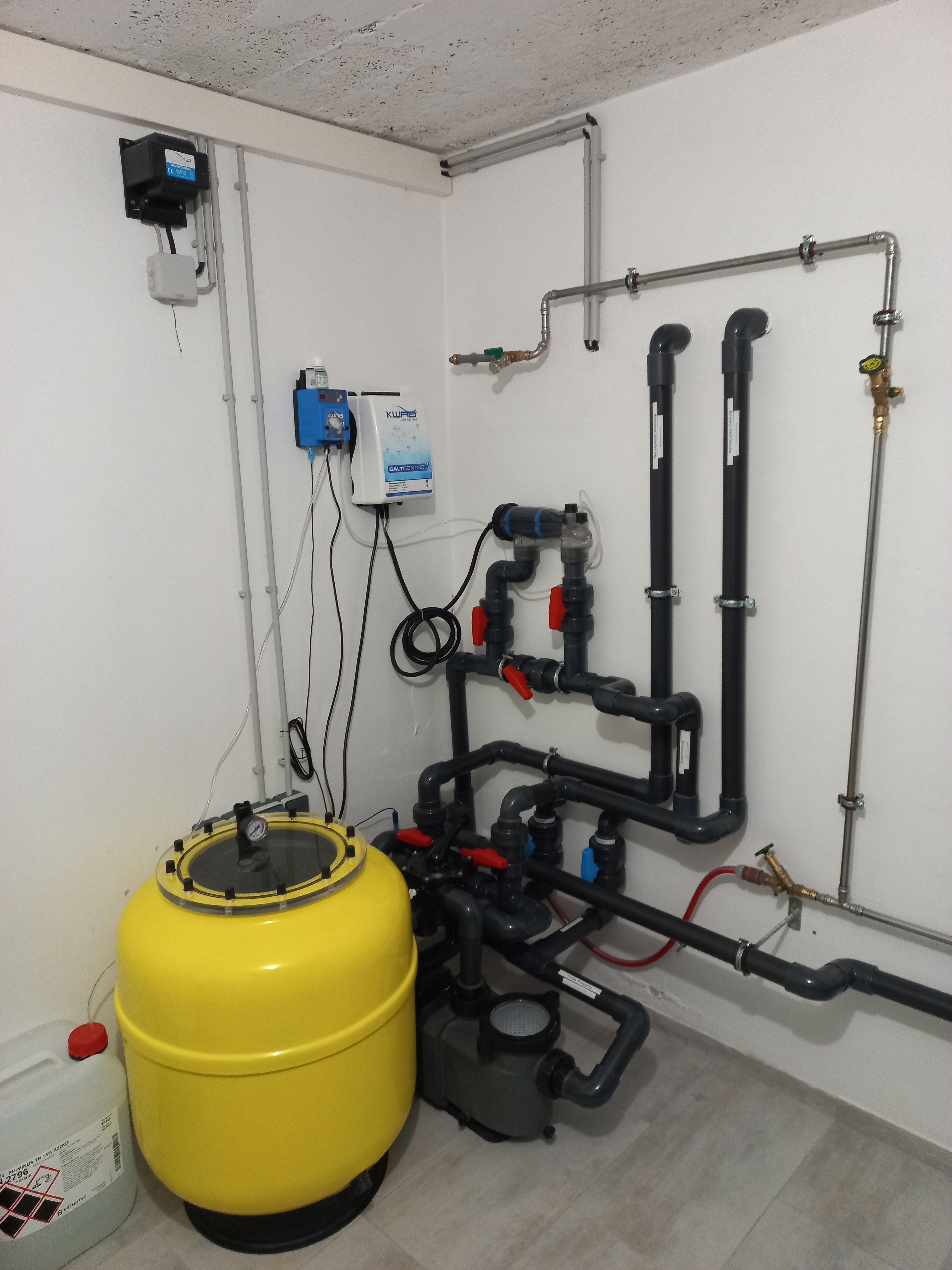
Why Equipment Care Matters
The pool equipment loop is a simple machine with an unfair number of ways to become annoying. Water leaves the pool through the skimmer and main suction line, passes the pump, moves through the filter, and returns clean enough to circulate again. If one part of that loop is clogged, cracked, or pulling air, everything downstream feels it.
Regular care matters for three reasons. First, it prevents expensive breakdowns by catching small problems before they spread. Second, it keeps the pump from working harder than it should, which helps efficiency and noise levels. Third, it extends equipment life. A pump that is not fighting debris and air leaks usually lasts longer than one that spends every day panting like it ran a marathon in a utility room.
A good rule: do a quick visual check every week, a deeper inspection every month, and a more thorough review at seasonal changeover. You do not need a spreadsheet for this, but a short checklist helps. The value is not in being fancy; the value is in being consistent.
Quick inspection map
| Part | What normal looks like | Early warning sign | First response |
|---|---|---|---|
| Filter | Steady flow, pressure in the normal band, clean pressure gauge reading after service | Reduced flow, pressure rising quickly, cloudy return water | Backwash or clean the element, then recheck pressure |
| Pump | Even hum, stable prime, no visible drips | Rattling, squealing, air bubbles, wet housing | Check lid seal, basket, and suction joints |
| Skimmer | Basket catches debris without blocking flow | Basket packed with leaves, flap stuck, strong suction noise | Empty basket and inspect the throat and weir |
| Hoses and unions | Dry, tight, flexible where needed | Cracks, swelling, salt marks, seepage | Replace worn parts before they split |
Filter: Signs of Clogging and Cleaning Approach
The filter is where the system pays for the pool’s lifestyle choices. It catches the fine stuff you cannot see, and it slowly loads up until flow starts to shrink. If the return jets feel weaker, the pressure gauge is climbing, or the water looks less crisp after the pump has been running for a while, the filter deserves attention first.
For a plain-language overview of filter types, the swimming pool filter reference is useful because it separates cartridge, sand, and DE systems without hiding the basic job they all share: remove debris, then let water move again. You do not need to become a filter theorist. You need to know what your system is telling you.
Common signs the filter is clogged
- Return jets feel weaker than usual.
- The pressure gauge is higher than the baseline you saw after the last proper clean.
- The pump is running longer to achieve the same circulation.
- Water stays a little dull even after chemical balance looks fine.
- Air bubbles or surging appear after the filter has been neglected for a while.
One practical point: always compare the current pressure with the clean baseline. A gauge reading by itself is not very helpful unless you know where “normal” starts on your setup. That baseline is your best diagnostic tool. The system does not care about guesswork; it cares about differential pressure, flow, and cleanliness.
Cleaning approach by filter type
Cartridge filters: shut down the pump, relieve pressure, remove the cartridge, and rinse it carefully from top to bottom. If you blast dirt deeper into the pleats, you are not cleaning it; you are rearranging the problem. If the cartridge is greasy, scale-coated, or frayed, a rinse may not be enough. Deep-cleaning solutions can help, but badly worn cartridges usually need replacement.
Sand filters: backwashing is the usual first step when pressure rises or flow drops. Run it until the water clears, then return to normal mode and recheck the pressure. If the sand is old, channelled, or compacted, backwashing stops being a fix and starts being a delay tactic. At that point, the media may need replacement or a deeper service review.
DE filters: these are efficient, but they reward careful maintenance. Clean them according to the manufacturer’s process, check the grids for tears, and make sure the DE powder is recharged correctly. If a DE filter is constantly losing performance, inspect for damaged grids or internal bypass. Hidden damage inside a filter is the kind of problem that looks small until it is suddenly not small.
Whatever type you have, avoid the temptation to force things. Do not pry aggressively, overtighten parts, or skip pressure release. The fastest way to turn a routine cleaning into a leak is to treat plastic fittings like they owe you money.
Pump: Noise, Leaks, and Airflow Checks
The pump is the mechanical heart of the system, which is another way of saying it is the part people notice immediately when it misbehaves. A pump that hums smoothly is usually fine. A pump that rattles, squeals, or grows louder over time is asking for inspection. It is not being dramatic. It is trying to avoid a worse problem.
The swimming pool pump reference is a clean way to see the basic role of the unit, but the maintenance checks are straightforward: listen, look, and feel for changes. A healthy pump generally keeps its prime, moves water steadily, and stays dry around the lid, union joints, and base.
What pump noise means
- Low hum at startup: often normal as long as the pump primes quickly.
- Rattling or gravel-like noise: could mean debris in the basket, a worn impeller, or a loose mount.
- Squealing: often points to bearing wear or friction inside the unit.
- Chattering or surging: may suggest air entering the suction side or an unstable water supply.
Start with the easy things. Check the pump basket, clear debris, and make sure the lid O-ring is seated cleanly and not flattened, cracked, or gritty. A lid seal that looks tired can let air into the system, and air is the enemy of a stable pump prime. That is one of those tiny parts that controls a surprisingly expensive amount of drama.
Leaks and airflow checks
Look for drips at the lid, union fittings, drain plug, and surrounding plumbing. Wet dust, mineral marks, or a small puddle under the unit are all clues. If you see bubbles returning to the pool, check for suction-side air leaks before blaming the filter. The air is usually entering before the pump, not after it.
Also watch the water level in the pool itself. If the level is too low, the skimmer can pull air instead of water. That problem can sound like a pump fault even when the pump is doing exactly what the water level allows. Again, the machine is not sentient; it is just obeying physics in a slightly rude way.
If the pump motor feels unusually hot, repeatedly trips a breaker, or stops and starts without a clear reason, stop there. That is technician territory. Electrical repair is not something to freestyle on a wet equipment pad. The right move is to isolate the symptom and get help.
Skimmer and Baskets: Cleaning Routine
The skimmer is the first line of defense and the first thing to get ignored. It catches leaves, insects, blossoms, and whatever the wind decided your pool needed today. If the skimmer basket is full, the pump has to work harder to pull water through it. That extra resistance does not improve performance. It just makes everything sound more tired.
When usage is high, empty skimmer and pump baskets often enough that they never become packed. In a stormy week or during heavy leaf drop, that may mean every day. In calmer periods, two or three times a week may be enough. The right interval is the one that keeps flow stable and the basket from becoming a small compost heap.
What to inspect in the skimmer
- The basket should sit properly and not crack under light pressure.
- The skimmer flap or weir should move freely and not stick open or closed.
- The throat should be clear of hard debris, twigs, or packed leaves.
- The water line should let the skimmer do its job without sucking air.
After emptying the basket, take a second to look at what it caught. Fine grit, plant matter, and small plastic bits each tell a different story about what is entering the system. A skimmer basket is not just storage; it is a diagnostic sample. That is why experienced technicians look at the debris before they throw it away.
If you want a wider context on pool cleanliness and why debris control matters, the general overview of swimming pool sanitation is a useful background note. It is not a maintenance checklist, but it explains why clean circulation and debris removal are tied together.
Hoses and Connections: What to Look For
Hoses and fittings are the quiet middle layer of the system. They usually do not get applause, and that is fine. Their job is to stay sealed and flexible where needed. The problem is that sunlight, vibration, age, chemical exposure, and pressure changes wear them down slowly. Then one day they stop being quiet.
Inspect flexible hoses for cracks, whitening, swelling, soft spots, and kinks. Rigid plumbing should be checked at unions, couplings, and valve bodies for seepage, salt marks, and hairline fractures. The signs are often subtle before they become obvious. If you catch a seep early, you can often replace a fitting or seal before the leak spreads across the pad.
Connection checks that actually matter
- Hand-tighten lids and unions only to the point recommended by the manufacturer; do not wrench them down like a stuck trailer hitch.
- Check O-rings for dirt, flattening, and nicks.
- Inspect valve handles for stiffness or wobble.
- Look for white mineral residue that signals a slow leak.
A useful trick is to wipe the equipment area dry after service, then inspect it again after the system has been running for a while. New moisture will stand out. It is a simple method, and simple methods are underrated because they do not sound glamorous enough for marketing copy.
Seasonal Shutdown/Start-Up Basics
Seasonal maintenance is less about calendar dates and more about conditions. If the pool is going through a quieter period, or if a service window is coming up, the equipment deserves a reset instead of a shrug. Shut-down and start-up routines are where many hidden issues show themselves.
Before a seasonal shutdown
- Clean the filter and baskets so debris does not sit in the system for weeks.
- Inspect pump seals, lids, and unions for wear.
- Drain water from lines only if your setup requires it and you know the proper process.
- Store removable accessories in a dry, labeled place.
- Make note of anything that already looks suspect so it is not forgotten later.
The key idea is to leave the system in a clean, known state. A dirty shutdown makes spring start-up harder than it needs to be. If you begin the next cycle with a clogged basket, loaded filter, or a questionable seal, you are simply carrying the problem forward in time.
Before a seasonal start-up
- Recheck all seals and fittings before pressurizing the system.
- Prime the pump carefully and confirm that water reaches the basket quickly.
- Watch the gauge and listen during the first run.
- Confirm that skimmer, returns, and valves are all flowing as expected.
- Do a second walkthrough after the first hour of operation.
Start-up is where a dry seal, a forgotten crack, or a lazy union often reveals itself. That is not a failure. That is a useful test. The trick is to be there when the test happens.
Red Flags That Require a Technician
There is a point where basic maintenance stops being enough. If you hit that point, do not keep poking the system until it gets more expensive. Call a technician when you see any of the following:
- Persistent leaks that return after you clean and reseat the obvious joints.
- Noise that gets worse instead of better after basket cleaning and prime checks.
- A pump that loses prime repeatedly for no obvious reason.
- Burning smell, repeated breaker trips, or electrical symptoms of any kind.
- Filter pressure that swings wildly or stays abnormal after proper cleaning.
- Cloudy or weak circulation that does not improve after the usual checks.
Another red flag is a problem that seems to disappear whenever you open the equipment lid and then comes back later. That is usually a sign of an intermittent fault, not a solved one. Intermittent problems are where patient observation and proper tools beat guesswork every time.
If you are comparing maintenance notes or trying to decide whether a repair is worth doing now or later, it can help to treat the pool system like any other service workflow: symptoms, checks, cause, action. A small team that wants to track those steps digitally could prototype a simple web app generator for service notes and reminders, but paper works too if the checklist actually gets used. That structure prevents random tinkering. It also keeps people from replacing three parts when one gasket would have done the job.
Simple Routine You Can Reuse
Use this loop as a monthly baseline:
- Empty skimmer and pump baskets.
- Check pump sound, lid seal, and visible leaks.
- Read the filter pressure gauge and compare it to the clean baseline.
- Inspect hoses, unions, and valves for seepage or wear.
- Confirm strong, even return flow.
- Make one note if anything looks new, even if it is not urgent yet.
That is enough to catch most issues early. You do not need to turn pool care into a personality. You need a system, a memory aid, and the discipline to check the same points before the system starts complaining.
Final Takeaway
Pool equipment care works best when it stays practical. Check the filter when flow drops. Check the pump when noise changes. Check the skimmer when debris starts winning. Check hoses and connections before a small seep becomes a wet floor and a bigger invoice. And if a problem persists after the normal checks, stop there and get help.
For homeowners who want a tidy, dependable maintenance routine, the real goal is not perfection. It is early detection. That is the difference between a five-minute cleanout and a weekend of troubleshooting. If you want a hand with the next step, start at the homepage, reach out through the contact form, or review the service area on where we work.
Key points to remember:
- Keep a clean baseline for filter pressure so you know what changed.
- Treat new pump noises, air bubbles, and drips as early warnings.
- Empty skimmer and pump baskets often enough that flow never has to fight debris.
- Inspect hoses, unions, and O-rings before they fail under pressure.
- Do a simple seasonal reset so the next start-up is predictable.
- Call a technician when the problem is electrical, persistent, or outside basic maintenance.